
Braces
Continuous fixed mechanics; hygiene and breakage require attention.
Compare the mechanics and care model after the diagnosis—not the marketing image before it.
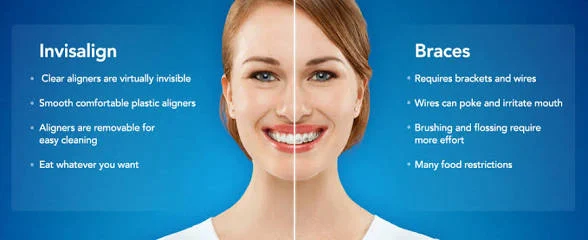
Braces are fixed and deliver force without daily insertion. Aligners are removable and can simplify meals and brushing, but prescribed wear and safe storage become part of treatment.
Invisalign is one clear-aligner brand. Brand, software and material matter less than diagnosis, provider planning, monitoring, revision and finishing.
Use these as a decision filter at a real consultation.
Continuous fixed mechanics; hygiene and breakage require attention.
Removable branded aligners with digital planning, attachments and possible refinements.
Compare records, provider oversight, revision options and retention rather than assuming equivalence.
Different appliances express forces differently and distribute responsibility between provider and patient differently.
A fair comparison includes predictable movement, patient habits, aesthetics, oral hygiene, comfort, repairs, visit pattern and the plan if progress diverges.
A useful review should consider:
No single photograph, scan or symptom can answer every one of those questions. The treating provider should explain which records are needed, what each record shows and how the findings change the plan.
Ask why the recommended system is better for the specific diagnosis and what alternatives were rejected. A short explanation based only on appearance is inadequate.
When plans differ, compare objectives as well as appliances. One provider may be proposing limited alignment while another is proposing comprehensive bite correction.
Request written inclusions for records, visits, repairs, replacement aligners, refinements and retainers. Ask who personally approves and modifies the plan.
Do not interpret a digital simulation or fast advertised timeline as a guarantee.
External sources can change. Verify current regulatory and product information at the linked publisher.
This website provides general education and does not diagnose, prescribe treatment or create a dentist-patient relationship. A licensed provider must examine the patient and review appropriate records. For pain, swelling, trauma, breathing difficulty, uncontrolled bleeding, infection or an appliance causing injury, contact a local dentist, treating provider or emergency service directly.