
Wear uncertainty
A fixed appliance removes the daily decision to insert the trays.
The decision should be tied to the hardest movement, the bite and the patient’s behaviour—not to a belief that one appliance is always more modern.
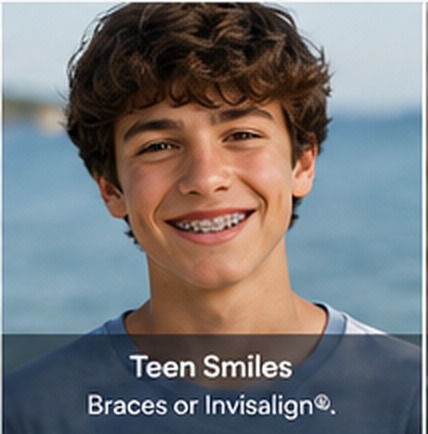
Examples can include difficult rotations, extrusion, impacted-tooth traction, complex space closure, substantial bite correction, need for continuous force or a patient who is unlikely to wear aligners consistently.
These are not absolute rules. Experienced providers can manage many complex movements with aligners and auxiliaries, while some apparently simple cases can be difficult. The provider should explain the specific movement that changes the recommendation.
Use these as a decision filter at a real consultation.
A fixed appliance removes the daily decision to insert the trays.
Wires, springs, elastics and auxiliaries can apply continuous force in selected directions.
Impacted teeth, large space closure or combined treatment may favour fixed control.
Most cases contain easy movements and one or two difficult ones. A comparison should focus on those limiting movements rather than on the average appearance of the case.
Ask the provider to point to the tooth or bite relationship that is hardest to correct, describe how braces would manage it, and explain how an aligner plan would address the same problem.
The recommendation may be influenced by:
No single photograph, scan or symptom can answer every one of those questions. The treating provider should explain which records are needed, what each record shows and how the findings change the plan.
Braces remain a sophisticated force-delivery system. Choosing them can be a precise response to the diagnosis rather than a fallback. Clear aligners are equally legitimate when they match the movement and patient.
A hybrid plan can also be sensible—for example, fixed mechanics for a difficult phase followed by aligners for finishing, or aligners with limited fixed auxiliaries.
Braces require careful cleaning, food modification and attention to loose brackets or wires. The patient trades removable convenience for continuous wear and reduced risk of losing the appliance.
For contact sport, instruments, travel or public-facing work, ask about mouthguards, lip protection, ceramic options and emergency access rather than assuming braces are incompatible.
External sources can change. Verify current regulatory and product information at the linked publisher.
This website provides general education and does not diagnose, prescribe treatment or create a dentist-patient relationship. A licensed provider must examine the patient and review appropriate records. For pain, swelling, trauma, breathing difficulty, uncontrolled bleeding, infection or an appliance causing injury, contact a local dentist, treating provider or emergency service directly.