
Wear
Aligners require prescribed daily wear; braces remain attached between visits.
Both systems can move teeth. They differ in how force is delivered, what the patient must do every day and which movements are most predictable for a particular case.
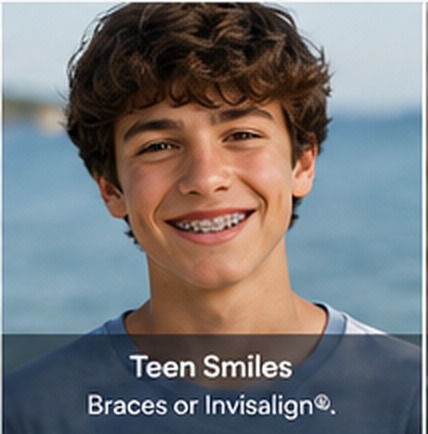
Invisalign aligners are removable, less visible and generally taken out for eating and cleaning. Braces are fixed, work continuously and do not depend on daily insertion. Those differences change hygiene, food, sport, speech, loss and breakage risks.
The comparison should also include root control, rotations, vertical movements, bite correction, attachments, elastics and finishing. An appliance that feels easier at the beginning is not necessarily the one that can complete the case most predictably.
Use these as a decision filter at a real consultation.
Aligners require prescribed daily wear; braces remain attached between visits.
Aligners come out, while braces require food caution and cleaning around fixed hardware.
Clear aligners are usually less noticeable; ceramic braces can reduce contrast but remain fixed.
Aligners simplify meals and brushing only when they are removed, stored safely and reinserted promptly. Braces remove the decision to wear the appliance but add bracket cleaning, wire management and food restrictions.
Speech changes with aligners are often temporary; cheek or lip irritation can occur with either system. Sports mouthguards and travel plans need to match the appliance rather than relying on a generic recommendation.
The provider may weigh:
No single photograph, scan or symptom can answer every one of those questions. The treating provider should explain which records are needed, what each record shows and how the findings change the plan.
Some cases can be treated well with either braces or aligners, making lifestyle and preference more important. Other cases have a clear mechanical advantage with one system. Hybrid plans may use limited braces, aligners or auxiliaries in sequence.
Ask the provider to identify which movement is hardest in your case and how each appliance would accomplish it. A generic list of benefits is less useful than a movement-specific explanation.
Confirm whether records, attachments, bracket repairs, replacement aligners, refinements, elastics, retainers and post-treatment checks are included. Also ask how missed visits or a move away from Nanaimo are handled.
Retention is required after either system. The appliance comparison is incomplete when it stops at the day braces are removed or the last aligner is worn.
External sources can change. Verify current regulatory and product information at the linked publisher.
This website provides general education and does not diagnose, prescribe treatment or create a dentist-patient relationship. A licensed provider must examine the patient and review appropriate records. For pain, swelling, trauma, breathing difficulty, uncontrolled bleeding, infection or an appliance causing injury, contact a local dentist, treating provider or emergency service directly.